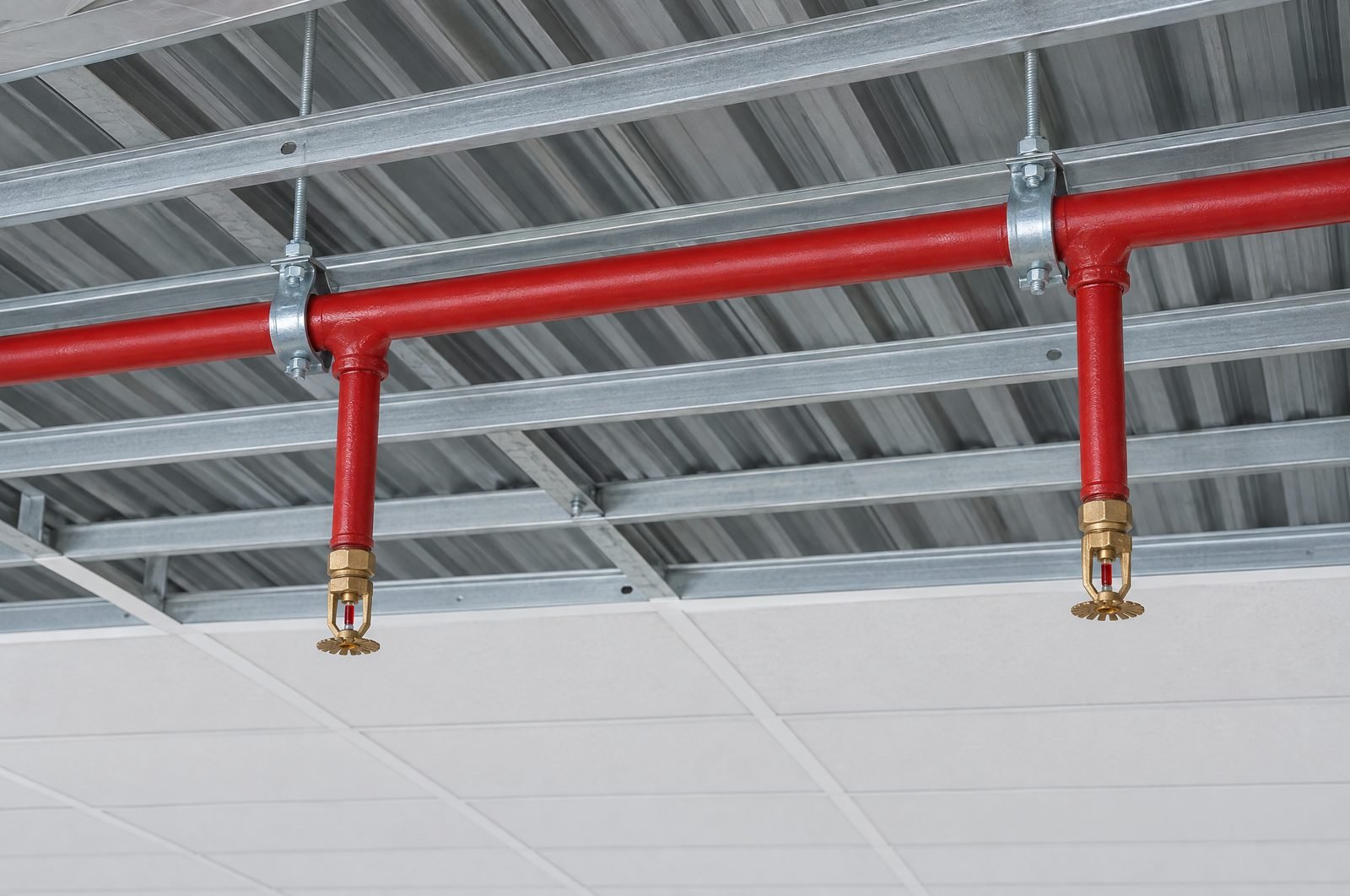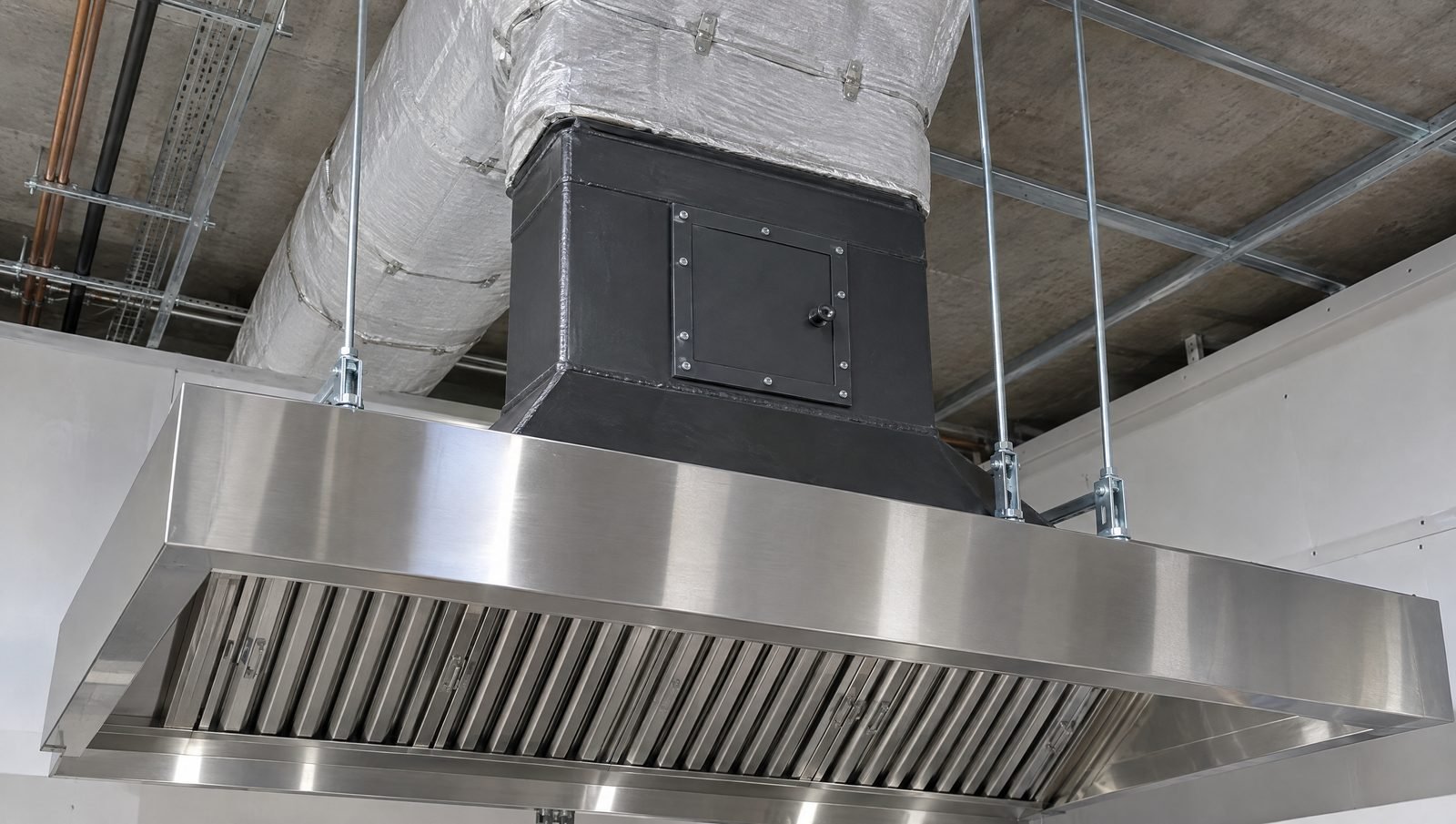
A restaurant kitchen has to get four systems right before the ceiling closes: a hood over the cooking line with grease filters, a sealed and cleanable duct to an approved discharge point, fresh make-up air so the kitchen is held at slightly lower pressure than the dining room, and drainage that runs through a grease trap before it reaches the building's pipes. Suppression over the cooking line and gas safety sit inside the same system. They are the fit-out's least visible work and the most common reason a restaurant opens late.
What must a restaurant kitchen get right?
| System | Right | Wrong |
|---|---|---|
| Hood | Covers every cooking appliance with overhang; baffle filters; suppression piped in | Sized to the old menu; a fryer outside its edge |
| Extract duct | Sealed joints, access doors for cleaning, the shortest route to discharge | Long flexible runs, no access, grease pooling at low points |
| Discharge | Where the building and authorities allow, clear of air intakes and neighbours | Smoke and smell carried into the next unit or back into the dining room |
| Make-up air | Fresh air supplied to balance the extract | Doors that slam, a dining room that smells of the fryer |
| Grease trap | Sized to the kitchen, accessible for emptying, before the building drain | Too small, buried under equipment, blocked within weeks |
| Floor and walls | Falls to floor drains, washable surfaces, sealed junctions | Standing water, grout that absorbs grease |
| Gas | Leak detection and an automatic shut-off tied to the suppression | A manual valve behind the equipment |
How is a kitchen extract designed?
From the menu, not the floor plan. The cooking line, what is fried, grilled or boiled and how much of it at the peak hour, sets the hood's size and the air it must move. The hood sets the duct. The duct sets the fan and its route to a discharge point, which in a mall is usually the landlord's kitchen exhaust shaft and in a standalone building is at roof level. Only then is the ceiling height known.
The order matters because the extract duct is the largest service in the ceiling. Draw it last and it collides with everything drawn before it.
What is make-up air, and why does it matter?
An extract removes a great deal of air. If nothing replaces it, the kitchen pulls air from wherever it can: under doors, through the dining room, down the drains. Make-up air is fresh air supplied to replace most of it, tempered so the cooks can work, while the kitchen stays at slightly lower pressure than the dining room, so smells travel into the hood rather than out to the guests.
What does the drainage need?
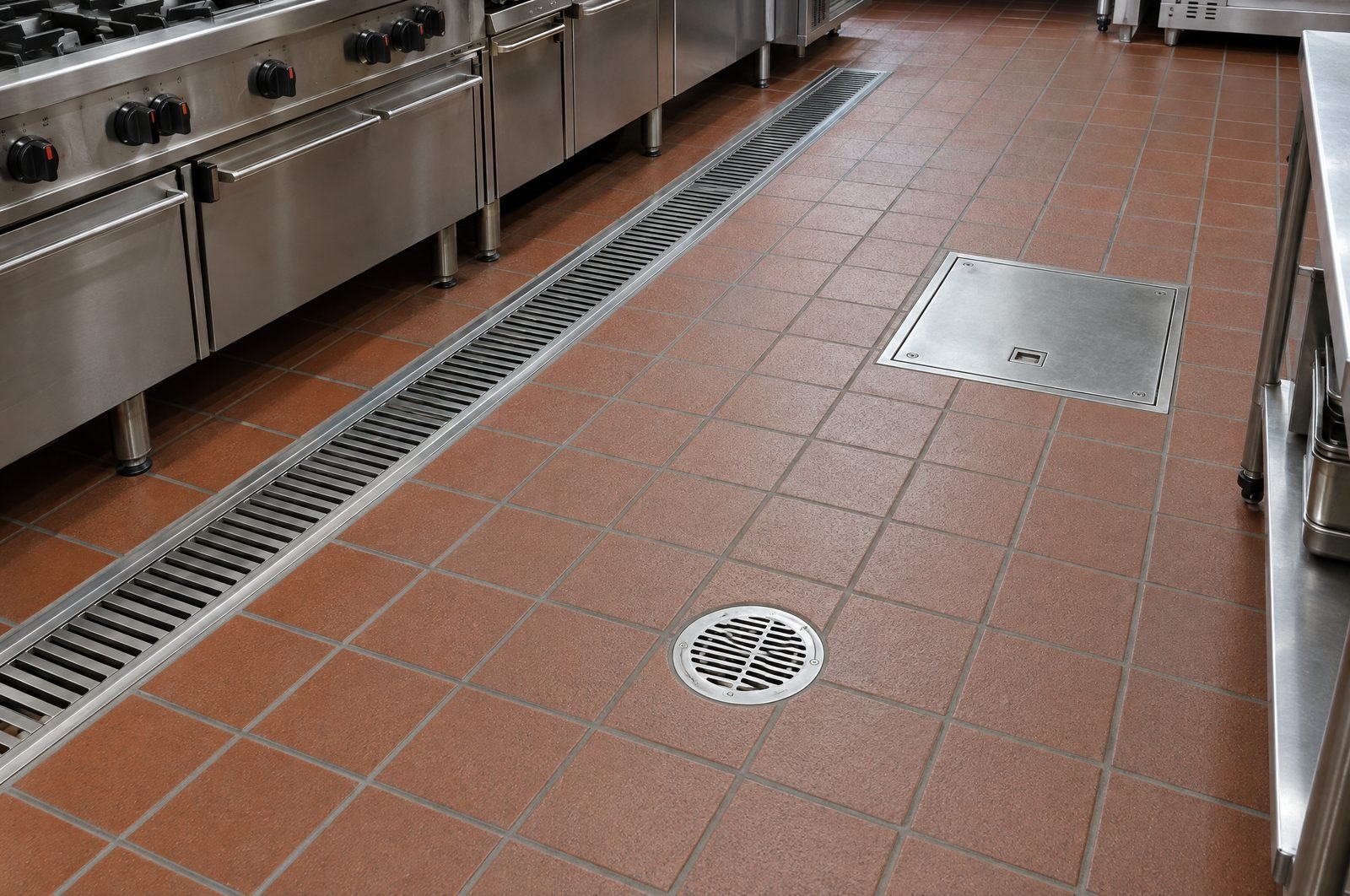
Grease cools and sets in pipes. Kitchen drainage therefore passes through a grease trap, or interceptor, that holds the water long enough for the fat to separate before it reaches the building's drainage. It must be sized to the kitchen, placed where it can be emptied without moving equipment, and emptied on a schedule. The municipality and the landlord both expect it; a mall will specify its type and location.
The floor falls to drains, the junctions between floor and wall are coved and sealed, and the finishes are washable. These are health requirements as much as practical ones; the licences guide covers the inspection.
How do suppression and gas fit in?
The hood carries an automatic suppression system with nozzles over each appliance and in the duct. When it discharges, it shuts off the gas and the power to the cooking line. Where gas is used, the supply has leak detection and an automatic shut-off valve, installed and tested by a licensed installer. Civil defence inspects both; the civil defence guide sets out what it checks.
Why build these with your own team?
Because the extract is the system that most often fails when it is handed to a subcontractor, and because the hood, the duct, the suppression, the gas and the ceiling have to be coordinated by the same people. At Artline our own HVAC team installs the extract and ductwork. The restaurants page and our own trades set out the rest. MEP defects are covered for 24 months.
Questions owners ask
Can a restaurant open in a unit without a kitchen exhaust shaft?
Sometimes, if a duct route to an approved discharge point can be built and the landlord allows it. Survey it before signing the lease; it can decide whether the unit works at all.
How often does the extract duct need cleaning?
It depends on what is cooked and how much. Heavy frying needs it far more often than a café. The access doors built into the duct are what make it possible.
Does a café need a grease trap?
If it washes dishes and prepares food, usually yes, though a smaller one. The landlord and municipality set the requirement.
Can the kitchen equipment be chosen after the extract is built?
It should not be. The hood is sized to the equipment; change the fryer and the hood may no longer cover it.